WE HAVE RECOVERED MILLIONS
OF DOLLARS FOR OUR CLIENTS
$3,400,000
Traffic Fatality
$2,150,000
Traffic Accident
$1,300,000
Motorcycle Accident
WE HAVE RECOVERED MILLIONS OF DOLLARS FOR OUR CLIENTS
$3,400,000 |
$2,150,000 |
$1,300,000 |
Traffic Accident |
Traffic Fatality |
Motorcycle Fatality |
WE HAVE RECOVERED MILLIONS OF DOLLARS FOR OUR CLIENTS
$3,400,000 |
$2,150,000 |
$1,300,000 |
Traffic Accident |
Traffic Fatality |
Motorcycle Accident |
PROVING FAULT IN JACKSONVILLE MOTORCYCLE ACCIDENTS
Motorcycle accidents frequently raise difficult questions about which driver was responsible for a collision. A motorcyclist may have the right of way yet still face allegations of speeding, improper positioning, or failing to avoid another vehicle. When proving fault in Jacksonville motorcycle accidents, I examine the circumstances surrounding the collision rather than relying on assumptions about how motorcyclists operate their vehicles. Establishing responsibility requires identifying the actions of everyone involved, determining whether those actions violated an applicable duty of care, and evaluating whether the conduct contributed to the accident.
The investigation may involve reviewing police reports, interviewing witnesses, examining vehicle damage, obtaining available video recordings, and analyzing physical evidence from the accident scene. Each source of information can help clarify how the collision occurred, although no single piece of evidence necessarily establishes responsibility. In proving fault in Jacksonville motorcycle accidents, I consider how the available evidence supports or contradicts the accounts provided by the drivers. Particular attention may be necessary when a motorist claims not to have seen an approaching motorcycle or disputes the rider’s position, speed, or right of way before impact.
Florida negligence law requires more than demonstrating that an accident occurred or that someone suffered serious injuries. A successful claim must establish the necessary elements of negligence, including a legally sufficient connection between another party’s conduct and the resulting harm. When proving fault in Jacksonville motorcycle accidents, my objective is to evaluate those requirements through reliable evidence and the applicable legal standards. This discussion explains the investigative methods and legal considerations that may help injured motorcyclists understand how responsibility is established, particularly when the circumstances of a collision are disputed.
Rapid Response Contact Form
Free Consultations | NO Upfront Fees
WHAT OUR CLIENTS ARE SAYING






WHAT OUR CLIENTS ARE SAYING
Key Points for Motorcycle Accident Victims.

Key Points for Motorcycle Accident Victims.
Key Points for Motorcycle Accident Victims.
What Must Be Established to Prove Fault in a Motorcycle Accident?
Establishing negligence in a motorcycle accident claim generally requires proving four essential elements: duty of care, breach of that duty, causation, and legally recognizable damages. Motorists have a responsibility to operate their vehicles with reasonable care under the circumstances, including maintaining awareness of surrounding traffic and responding appropriately to roadway conditions. When proving fault in Jacksonville motorcycle accidents, I examine whether another driver failed to exercise reasonable care and whether that failure contributed to the collision. Conduct such as failing to yield, making an unsafe turn, or disregarding traffic signals may provide evidence of negligence, depending on the circumstances and applicable law.
Establishing a breach of duty is only part of the legal analysis. The evidence must also demonstrate that the driver’s negligent conduct was a legal cause of the collision and resulting injuries. In proving fault in Jacksonville motorcycle accidents, I consider witness accounts, physical evidence, traffic-control information, and other available documentation to evaluate that connection. Florida negligence law also recognizes circumstances in which more than one person contributes to an accident, making the allocation of responsibility an important consideration. A careful evaluation of all four elements helps determine whether the available evidence supports a legally viable claim rather than relying solely on the fact that a motorcycle collision occurred.
How Police Accident Reports Help Establish What Happened
Police accident reports often provide an important starting point when investigating a motorcycle collision. A Florida traffic crash report may identify the drivers, vehicles, witnesses, location, and circumstances surrounding the accident. Depending on the investigation, it may also contain diagrams, descriptions of roadway conditions, and observations made by the responding officer. When proving fault in Jacksonville motorcycle accidents, I review these details to identify potential evidence and determine which aspects of the collision require further investigation. Although an officer’s findings may provide useful information, the report alone does not necessarily establish who was legally responsible for the accident.
Florida Statute §316.066 places important limitations on the use of certain crash reports and statements in legal proceedings. Under the accident-report privilege, statements made by people involved in a collision to law enforcement officers for the purpose of completing a required crash report generally cannot be introduced as evidence at trial, subject to statutory exceptions. When proving fault in Jacksonville motorcycle accidents, I distinguish these protected statements from independently obtained evidence, such as physical observations, photographs, and qualifying witness testimony. The admissibility of particular information depends on its source, the circumstances under which it was obtained, and the applicable rules of evidence.
A police report can also help identify inconsistencies between the drivers’ accounts and the available physical evidence. For example, an officer may document vehicle positions, roadway debris, or the location of impact damage that warrants closer examination. In proving fault in Jacksonville motorcycle accidents, I use this information to guide further investigation rather than treating the report’s conclusions as definitive. Additional evidence may confirm, clarify, or contradict the initial findings. A careful review helps establish a more complete understanding of the collision while respecting Florida’s legal restrictions on the use of accident-report information.
Establishing Fault in Left-Turn Motorcycle Collisions
Left-turn collisions frequently raise questions about whether a driver failed to yield to an approaching motorcycle. Florida Statute §316.122 requires drivers turning left to yield to oncoming vehicles that are within the intersection or close enough to present an immediate hazard. When proving fault in Jacksonville motorcycle accidents, I examine the positions and movements of both vehicles, the applicable traffic signals, and the distance between them when the turning driver began the maneuver. A driver’s failure to yield may support a negligence claim, but determining responsibility requires evaluating the circumstances rather than assuming that every left-turn collision establishes fault.
Disputes sometimes arise when a turning driver claims the motorcycle was speeding, approaching unexpectedly, or difficult to see. In proving fault in Jacksonville motorcycle accidents, I consider available video recordings, witness statements, roadway measurements, vehicle damage, and other evidence that may help establish the sequence of events. Traffic signal timing, sightlines, and the motorcycle’s approach speed can be particularly important when determining whether the driver had a reasonable opportunity to recognize and yield to the approaching rider. My objective is to establish whether the turning driver’s conduct violated an applicable duty of care and contributed to the collision, while evaluating any evidence suggesting that the motorcyclist also shared responsibility.
Proving That a Driver Failed to See an Approaching Motorcycle
Motorcyclists can be overlooked by drivers who fail to recognize their presence before changing lanes, entering traffic, or making other roadway maneuvers. A motorcycle’s smaller profile may make its distance and approaching speed more difficult to judge, particularly in congested traffic. When proving fault in Jacksonville motorcycle accidents, I examine whether the driver maintained a reasonable lookout and had an adequate opportunity to observe the motorcycle before acting. A driver’s statement that they did not see an approaching rider does not automatically establish negligence or excuse the collision. The central question is whether reasonable care under the circumstances would have revealed the motorcycle’s presence.
Visibility conditions are particularly important when evaluating these collisions. Parked vehicles, roadside structures, surrounding traffic, weather, and lighting may obstruct a driver’s view or affect the time available to recognize an approaching motorcycle. In proving fault in Jacksonville motorcycle accidents, I consider the driver’s position, available sightlines, mirror visibility, and whether the motorcycle was within an area the driver reasonably should have checked. Florida’s careless driving statute requires motorists to operate their vehicles carefully and prudently under the circumstances. Determining whether that duty was breached requires examining the actual roadway conditions rather than assuming that every failure to see a motorcycle constitutes negligence.
Evidence of inadequate observation may include surveillance recordings, witness testimony, photographs of the roadway, and measurements establishing what was visible from the driver’s position. The timing of a lane change or other maneuver may also help determine whether the driver had sufficient opportunity to recognize the motorcycle and respond appropriately. When proving fault in Jacksonville motorcycle accidents, I compare these findings with the driver’s account and any evidence concerning the rider’s speed, position, or visibility. My objective is to determine whether a failure to maintain a reasonable lookout contributed to the collision, while considering other circumstances that may have affected either driver’s ability to avoid the accident.
Using Witness Statements and Independent Testimony
Eyewitness testimony can provide important information about a motorcycle collision, particularly when the drivers offer conflicting explanations of what occurred. Independent witnesses may have observed traffic signals, vehicle movements, lane positions, or actions immediately preceding the impact. When proving fault in Jacksonville motorcycle accidents, I consider whether a witness had an unobstructed view, how much of the incident they observed, and whether their account is consistent with other available evidence. Statements from pedestrians, nearby motorists, and business employees may help establish details that neither driver could accurately observe. However, even sincere witnesses can misjudge speed, distance, or the sequence of rapidly unfolding events.
The reliability of witness testimony depends on several factors, including the witness’s location, attention, opportunity to observe, and ability to recall relevant details. In proving fault in Jacksonville motorcycle accidents, I compare witness accounts with photographs, vehicle damage, roadway evidence, and available recordings to identify consistencies or significant discrepancies. I also distinguish independent observations from statements influenced by assumptions or information learned after the collision. When witnesses disagree, their accounts must be evaluated in context rather than automatically favoring the person who appears most confident. My objective is to determine what each witness can reliably establish and how that testimony contributes to an accurate understanding of responsibility for the accident.
Video Evidence From Traffic Cameras, Dashcams and Nearby Businesses
Video recordings can provide valuable evidence when drivers disagree about how a motorcycle collision occurred. Traffic cameras, dashboard cameras, helmet-mounted cameras, and surveillance systems at nearby businesses may capture vehicle movements immediately before an accident. When proving fault in Jacksonville motorcycle accidents, I examine available recordings for information about traffic signals, lane positions, turning movements, and the timing of events leading to impact. Video evidence can sometimes clarify details that witnesses did not observe or remember accurately. However, camera angles, image quality, and obstructions may limit what a recording actually establishes about the collision.
Locating and preserving relevant footage can be particularly important because many recording systems automatically overwrite older files. Businesses, property owners, and government agencies may maintain recordings under different retention policies, and not every traffic camera records or stores video. In proving fault in Jacksonville motorcycle accidents, I consider which cameras may have captured the collision and whether recordings can be obtained through appropriate requests or legal procedures. Preserving original files, timestamps, and related information can help establish authenticity and prevent questions about whether the footage has been altered. Early identification of potential video sources may prevent important evidence from becoming unavailable.
Even when video captures a collision, careful interpretation may be necessary to determine what it demonstrates. A recording might establish when a vehicle entered an intersection without clearly showing the traffic signal facing its driver. Camera perspective and frame rate can also affect attempts to estimate speed or distance. When proving fault in Jacksonville motorcycle accidents, I compare video evidence with witness accounts, roadway measurements, and physical findings to develop a more complete understanding of the events. My objective is to determine whether the recordings reliably support a particular explanation of the collision rather than treating video footage as conclusive simply because it exists.
Physical Evidence and Motorcycle Damage Analysis
Physical evidence from a motorcycle accident scene can provide important information about how a collision occurred, particularly when the drivers offer conflicting accounts. Vehicle damage, debris patterns, tire marks, roadway gouges, and the final resting positions of the vehicles may help identify the area of impact and their movements before the collision. When proving fault in Jacksonville motorcycle accidents, I examine how these physical findings correspond with witness statements, photographs, and other available evidence. The location and characteristics of damage to a motorcycle and another vehicle may also help investigators evaluate the direction and nature of the impact, although damage patterns alone do not necessarily establish which driver was negligent.
Preserving physical evidence is especially important when damaged motorcycles are repaired, sold, or declared total losses before a thorough examination. Photographs, measurements, inspection records, and roadway documentation can preserve details that might otherwise be lost. When proving fault in Jacksonville motorcycle accidents, I examine whether physical evidence supports the reported sequence of events and whether technical analysis is needed to interpret the findings. Roadway debris and tire marks, for example, may help establish vehicle movements but should not be used to calculate speed or assign responsibility without sufficient supporting evidence. My objective is to establish an accurate understanding of the collision based on verifiable facts rather than assumptions about the extent of vehicle damage.
Accident Reconstruction and Expert Analysis
Some motorcycle collisions involve conflicting accounts or complex circumstances that cannot be fully explained through witness statements and photographs alone. Accident reconstruction specialists may help determine how vehicles moved before impact, where a collision occurred, and whether the available evidence supports a particular sequence of events. When proving fault in Jacksonville motorcycle accidents, I consider whether specialized analysis could clarify disputed issues involving vehicle speed, braking, visibility, or the timing of a driver’s actions. Reconstruction is not necessary in every case, but it can be valuable when technical questions have a significant bearing on determining responsibility.
Qualified reconstruction professionals may examine roadway measurements, vehicle damage, tire marks, electronic vehicle data, surveillance recordings, and other available evidence. Their analysis may involve calculations, computer modeling, or established principles of vehicle dynamics to evaluate how a collision occurred. In proving fault in Jacksonville motorcycle accidents, I consider whether an expert’s methodology is appropriate for the available evidence and whether the conclusions are supported by reliable findings. Motorcycle dynamics differ from those of passenger vehicles, making relevant experience and an understanding of motorcycle handling particularly important when interpreting certain types of physical evidence.
Expert opinions must be evaluated alongside the other evidence rather than treated as automatically conclusive. Florida Statute §90.702 establishes requirements governing the admissibility of expert testimony, including the reliability of the principles and methods used and their application to the facts of the case. When proving fault in Jacksonville motorcycle accidents, I examine whether reconstruction findings provide a credible explanation of the collision and help establish a connection between a driver’s conduct and the resulting impact. My objective is to use appropriate technical evidence when it meaningfully strengthens the investigation, without suggesting that every motorcycle accident requires an expert or that reconstruction can resolve every disputed fact.
Establishing Fault When a Driver Was Distracted or Impaired
Driver distraction and impairment can contribute to motorcycle collisions by reducing awareness, delaying reactions, or interfering with safe vehicle operation. A motorist using a cellphone, attending to an electronic device, or driving under the influence of alcohol or drugs may fail to recognize an approaching motorcycle or respond appropriately to changing traffic conditions. When proving fault in Jacksonville motorcycle accidents, I examine whether reliable evidence establishes that the driver was distracted or impaired and whether that condition contributed to the collision. Witness observations, available video recordings, lawfully obtained electronic records, and findings from a criminal investigation may provide relevant information. However, suspected misconduct alone does not establish negligence or causation.
Florida Statute §316.193 addresses driving under the influence, while §316.305 restricts certain uses of wireless communications devices while operating a motor vehicle. Violations of these laws may provide important evidence, but the circumstances of the collision must still be examined to determine legal responsibility. In proving fault in Jacksonville motorcycle accidents, I consider the timing of the suspected conduct, its potential effect on the driver’s actions, and whether the evidence establishes a causal relationship to the impact. A criminal charge or traffic citation does not automatically resolve every issue in a civil negligence claim. My objective is to evaluate the available evidence independently and determine whether the driver’s conduct supports a legally sufficient finding of fault.
Connecting the Driver’s Negligence to the Motorcycle Collision
Establishing that a driver violated a traffic law or acted carelessly does not automatically prove that the conduct caused a motorcycle accident. A negligence claim must establish a legally sufficient connection between the driver’s actions and the resulting collision and injuries. When proving fault in Jacksonville motorcycle accidents, I examine whether the alleged negligence was a substantial contributing factor in producing the accident. For example, evidence that a driver was distracted may be relevant, but the investigation must also determine whether that distraction affected the driver’s ability to recognize or avoid the motorcycle. The distinction between identifying negligent conduct and establishing causation is essential to evaluating legal responsibility.
Determining causation may require analyzing the sequence of events, available reaction time, vehicle movements, and whether the collision would likely have occurred without the alleged negligent conduct. In proving fault in Jacksonville motorcycle accidents, I consider physical evidence, witness accounts, video recordings, and qualified expert opinions when necessary to evaluate these questions. Florida’s negligence framework recognizes that an injury may result from more than one contributing cause, and a driver’s negligence need not be the only cause to support liability. My objective is to establish whether the evidence demonstrates the required causal relationship rather than assuming that every traffic violation or unsafe action contributed to the collision.
Learn More About Motor Vehicle Accident Claims
No two motor vehicle accidents are exactly alike, and the laws, insurance issues, and evidence involved can vary depending on the type of collision and the circumstances surrounding it. Throughout my years of proving fault in Jacksonville motorcycle accidents, I have learned that understanding these differences often helps people make better decisions after an accident. I created the following resources to provide more detailed information about many of the specific legal issues I encounter in my practice as a motorcycle accident lawyer in Jacksonville. These articles are designed to help you better understand your legal rights and the factors that may affect your claim.
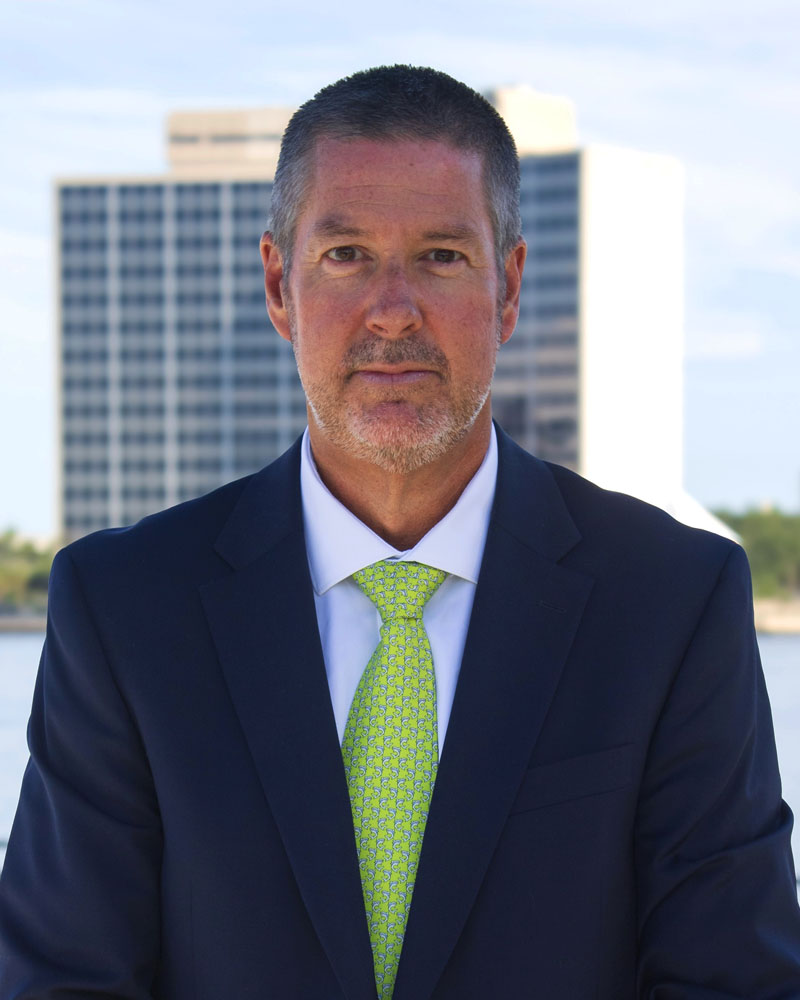
Meet Michael D. McGrath
Managing Partner
I co-founded McGRATH GIBSON LAW in 2007 with my law partner, Brad Gibson, after we combined our respective practices to better serve individuals and families throughout Northeast Florida. As the firm’s managing partner, I concentrate my practice on representing clients in serious personal injury, wrongful death, and negligence cases, including those involving motor vehicle accidents.
I am licensed to practice law in Florida, Georgia, and North Carolina and am a member of the state bar in each jurisdiction. Throughout my career, I have remained committed to providing clients with honest legal guidance, thorough case preparation, and personalized representation based on the unique facts of every case.
My professional credentials include an AV Preeminent® Peer Review Rating from Martindale-Hubbell® and a Superb rating from Avvo®. The AV Preeminent rating is based on confidential peer evaluations by members of the legal profession and reflects assessments of professional ethics and legal ability. According to Martindale-Hubbell, attorneys must generally have been admitted to practice for at least ten years before becoming eligible for this distinction.
Whether you are researching your legal options or deciding whether to hire a car accident lawyer in Jacksonville, I believe it is important to understand the qualifications and experience of the attorney who may represent you. My goal is to provide clear legal advice, answer your questions honestly, and help you make informed decisions about your case.

Meet Michael D. McGrath
Managing Partner
I co-founded McGRATH GIBSON LAW in 2007 with my law partner, Brad Gibson, after we combined our respective practices to better serve individuals and families throughout Northeast Florida. As the firm’s managing partner, I concentrate my practice on representing clients in serious personal injury, wrongful death, and negligence cases, including those involving motor vehicle accidents.
I am licensed to practice law in Florida, Georgia, and North Carolina and am a member of the state bar in each jurisdiction. Throughout my career, I have remained committed to providing clients with honest legal guidance, thorough case preparation, and personalized representation based on the unique facts of every case.
My professional credentials include an AV Preeminent® Peer Review Rating from Martindale-Hubbell® and a Superb rating from Avvo®. The AV Preeminent rating is based on confidential peer evaluations by members of the legal profession and reflects assessments of professional ethics and legal ability. According to Martindale-Hubbell, attorneys must generally have been admitted to practice for at least ten years before becoming eligible for this distinction.
Whether you are researching your legal options or deciding whether to hire a car accident lawyer in Jacksonville, I believe it is important to understand the qualifications and experience of the attorney who may represent you. My goal is to provide clear legal advice, answer your questions honestly, and help you make informed decisions about your case.
Meet Michael D. McGrath
Managing Partner
I co-founded McGRATH GIBSON LAW in 2007 with my law partner, Brad Gibson, after we combined our respective practices to better serve individuals and families throughout Northeast Florida. As the firm’s managing partner, I concentrate my practice on representing clients in serious personal injury, wrongful death, and negligence cases, including those involving motor vehicle accidents.
I am licensed to practice law in Florida, Georgia, and North Carolina and am a member of the state bar in each jurisdiction. Throughout my career, I have remained committed to providing clients with honest legal guidance, thorough case preparation, and personalized representation based on the unique facts of every case.
My professional credentials include an AV Preeminent® Peer Review Rating from Martindale-Hubbell® and a Superb rating from Avvo®. The AV Preeminent rating is based on confidential peer evaluations by members of the legal profession and reflects assessments of professional ethics and legal ability. According to Martindale-Hubbell, attorneys must generally have been admitted to practice for at least ten years before becoming eligible for this distinction.
Whether you are researching your legal options or deciding whether to hire a car accident lawyer in Jacksonville, I believe it is important to understand the qualifications and experience of the attorney who may represent you. My goal is to provide clear legal advice, answer your questions honestly, and help you make informed decisions about your case.

Contact Us
McGRATH GIBSON LAW
PERSONAL INJURY | FAMILY LAW | CRIMINAL DEFENSE
ATTORNEY DISCLAIMER
The Jacksonville personal injury attorneys, family law attorneys and criminal defense attorneys of McGRATH GIBSON LAW are licensed to practice in the states of Florida, Georgia, and North Carolina. Additionally, we represent the injured throughout the United States pro hoc vice, and with the help of local counsel. While we strive to personally handle all types of personal injury and wrongful death claims there are occasions where cases may be referred to another lawyer.
We also support our veterans by proudly providing representation for Military Veterans and the Men and Women who currently serve in our armed forces at the Mayport Naval Station, Naval Air Station of Jacksonville, Camp Blanding, United States Army, Army Reserve, United States Marines, Florida National Guard, Air National Guard, United States Coast Guard, Air Force, and Air Force Reserve. McGRATH GIBSON LAW family law attorneys offer representation in the areas of Family Law, Divorce, Alimony, Child Custody and Child Support throughout Florida. Representation for Military Divorce handled throughout the United States and U.S. Territories independently or with local counsel where required.
The hiring of a lawyer is an important decision that should not be based solely upon advertisements. This website is not intended to be an advertisement or solicitation. Material contained in the McGRATH GIBSON LAW website is for general information only and does not constitute legal advice or solicitation of legal services. Transmission of information from this website is not intended to create, and its receipt does not constitute an attorney-client relationship between the law firm of McGRATH GIBSON LAW and the reader. In the event that any information on this website does not conform fully with regulations in any jurisdiction, this law firm will not accept representation based on that information.
Information contained herein is the exclusive property of McGRATH GIBSON LAW and may not be copied, reproduced retransmitted or otherwise utilized for any purpose without the express written consent of McGRATH GIBSON LAW.
McGRATH GIBSON LAW
PERSONAL INJURY | FAMILY LAW | CRIMINAL DEFENSE
ATTORNEY DISCLAIMER
The Jacksonville personal injury attorneys, family law attorneys and criminal defense attorneys of McGRATH GIBSON are licensed to practice in the states of Florida, Georgia, and North Carolina. Additionally, we represent the injured throughout the United States pro hoc vice, and with the help of local counsel. While we strive to personally handle all types of personal injury and wrongful death claims there are occasions where cases may be referred to another lawyer.
We also support our veterans by proudly providing representation for Military Veterans and the Men and Women who currently serve in our armed forces at the Mayport Naval Station, Naval Air Station of Jacksonville, Camp Blanding, United States Army, Army Reserve, United States Marines, Florida National Guard, Air National Guard, United States Coast Guard, Air Force, and Air Force Reserve. McGRATH GIBSON family law attorneys offer representation in the areas of Family Law, Divorce, Alimony, Child Custody and Child Support throughout Florida. Representation for Military Divorce handled throughout the United States and U.S. Territories independently or with local counsel where required.
The hiring of a lawyer is an important decision that should not be based solely upon advertisements. This website is not intended to be an advertisement or solicitation. Material contained in the McGRATH GIBSON website is for general information only and does not constitute legal advice or solicitation of legal services. Transmission of information from this website is not intended to create, and its receipt does not constitute an attorney-client relationship between the law firm of McGRATH GIBSON and the reader. In the event that any information on this website does not conform fully with regulations in any jurisdiction, this law firm will not accept representation based on that information.
Information contained herein is the exclusive property of McGRATH GIBSON and may not be copied, reproduced retransmitted or otherwise utilized for any purpose without the express written consent of McGRATH GIBSON.
(904) 358-3300
Calls Answered 24 Hours a Day, Every Day.
Office: M-F 8:00 AM to 5:00 PM

Main Office:
6117 Atlantic Boulevard
Jacksonville, FL 32211
(904) 358-3300
Calls Answered 24 Hours a Day, Every Day.
Office Hours: M-F 8:00 AM to 5:00 PM
6117 Atlantic Boulevard
Jacksonville, FL 32211